
Carbon Accounting & GHG Emissions: Measure, Manage & Reduce Your Carbon Footprint
Credible Carbon Accounting Solutions
TBG helps companies measure Scope 1, Scope 2 and Scope 3 greenhouse gas emissions, establish credible carbon inventories, strengthen emissions data and build the foundation for reporting and decarbonization.
Understanding your organization's carbon footprint is increasingly essential for sustainability reporting, regulatory compliance, climate strategy and emissions reduction. TBG works with companies to establish robust GHG inventories, improve emissions data and methodologies, assess value-chain emissions, and translate carbon information into actionable business insights. For more information, just click below to schedule a complimentary consultation with our sustainability team or send an email.
Carbon Accounting: Overview
Carbon Accounting Overview
What You Need to Know About Carbon Accounting
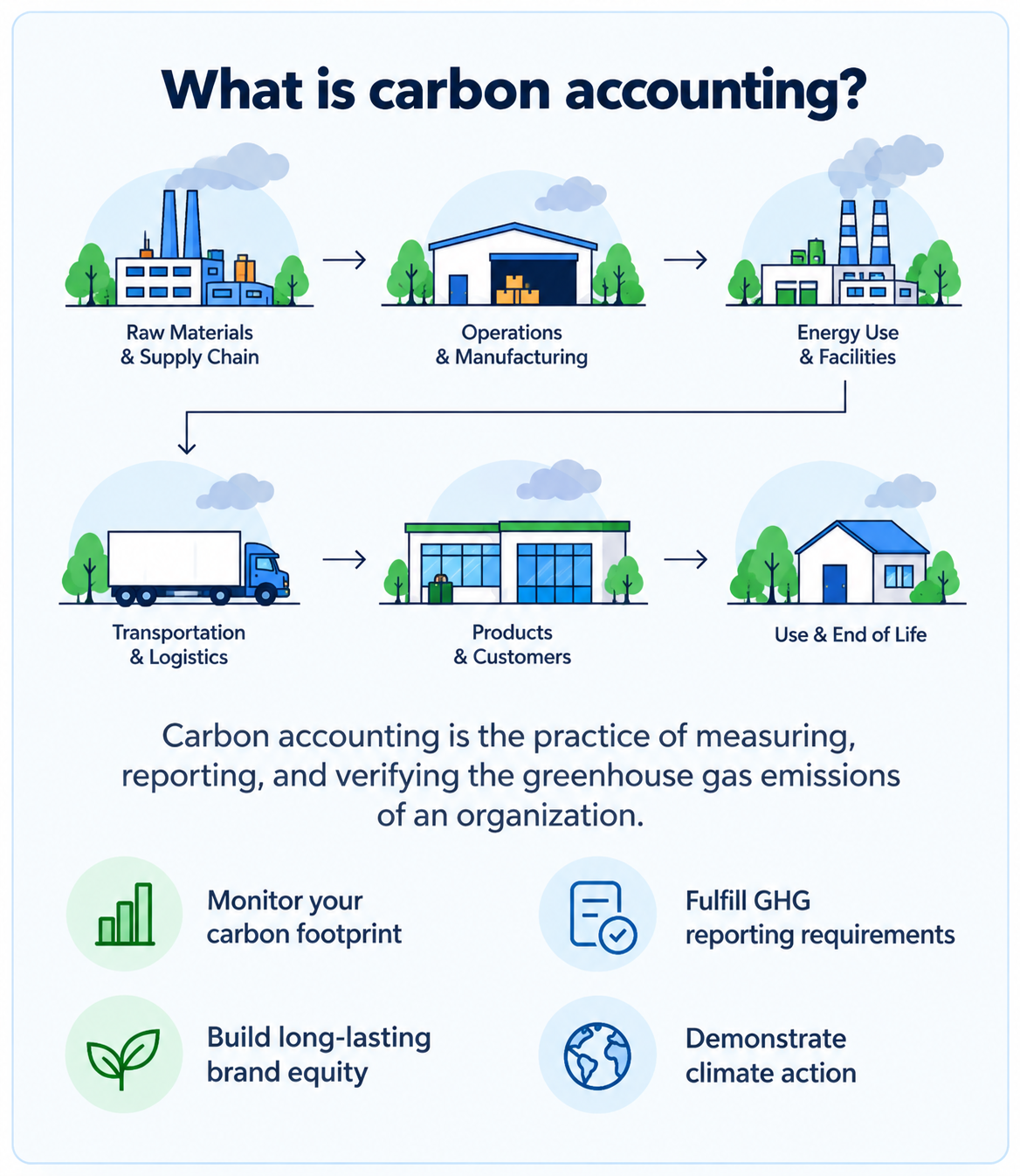
What is carbon accounting?
Carbon accounting is the process of measuring, calculating and tracking the greenhouse gas emissions associated with an organization's operations and value chain.
A corporate GHG inventory typically organizes emissions into Scope 1, Scope 2 and Scope 3, providing companies with a structured understanding of where emissions originate and where the greatest opportunities for improved measurement and emissions reduction may exist.
A credible carbon inventory can support regulatory and voluntary reporting, climate-related disclosures, target setting, supplier engagement and broader decarbonization strategies. Sphera similarly describes the corporate carbon footprint as establishing a consistent, scalable emissions-tracking process across the corporate value chain and as a foundation for audit-ready reporting and long-term progress.
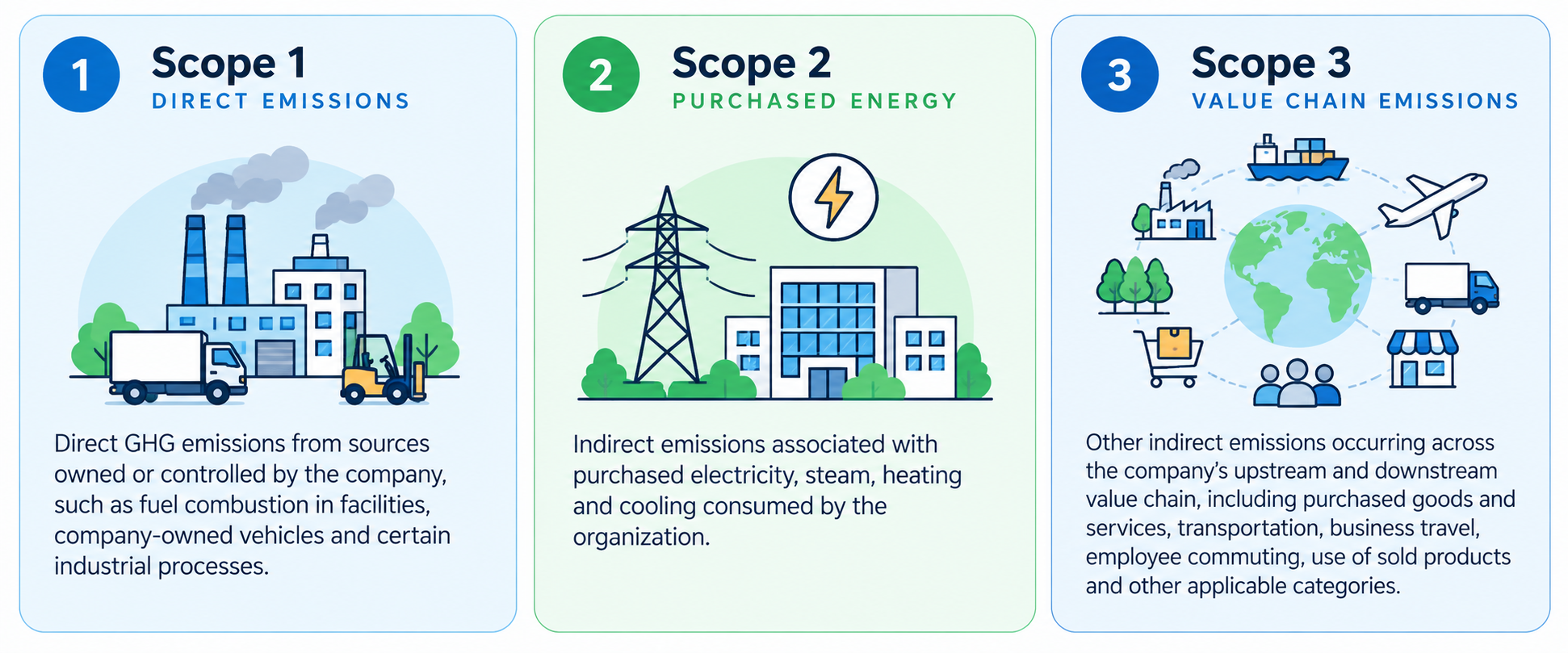
What are Scope 1, Scope 2 and Scope 3 emissions?
Scope 1 — Direct Emissions
Direct GHG emissions from sources owned or controlled by the company, such as fuel combustion in facilities, company-owned vehicles and certain industrial processes.
Scope 2 — Purchased Energy
Indirect emissions associated with purchased electricity, steam, heating and cooling consumed by the organization.
Scope 3 — Value Chain Emissions
Other indirect emissions occurring across the company's upstream and downstream value chain, including purchased goods and services, transportation, business travel, employee commuting, use of sold products and other applicable categories.
For many organizations, Scope 3 represents the most complex component of the carbon footprint because relevant emissions data may sit outside the company's direct operational control. Effective Scope 3 accounting therefore requires careful category assessment, data collection, estimation methodologies and supplier engagement.
Why Does Carbon Accounting Matter?
Reliable emissions data can help companies:
meet regulatory and voluntary reporting requirements;
support sustainability and climate-related disclosures;
identify major emissions sources and carbon hotspots;
establish credible emissions baselines;
develop and track climate targets;
prioritize decarbonization opportunities;
engage suppliers on value-chain emissions; and
improve the quality and consistency of carbon information provided to customers, investors and other stakeholders.
How Should Companies Approach Carbon Accounting?
Companies should establish a repeatable GHG accounting process rather than treating carbon measurement as a one-time calculation.
This begins with defining organizational and operational boundaries, identifying relevant emissions sources, determining data requirements and calculation methodologies, and establishing responsibilities for data collection and review.
Companies should then calculate their emissions inventory, evaluate data quality and methodological gaps, document assumptions and emission factors, and establish processes for periodically updating and improving the inventory.
How TBG Can Support Your Carbon Accounting Process
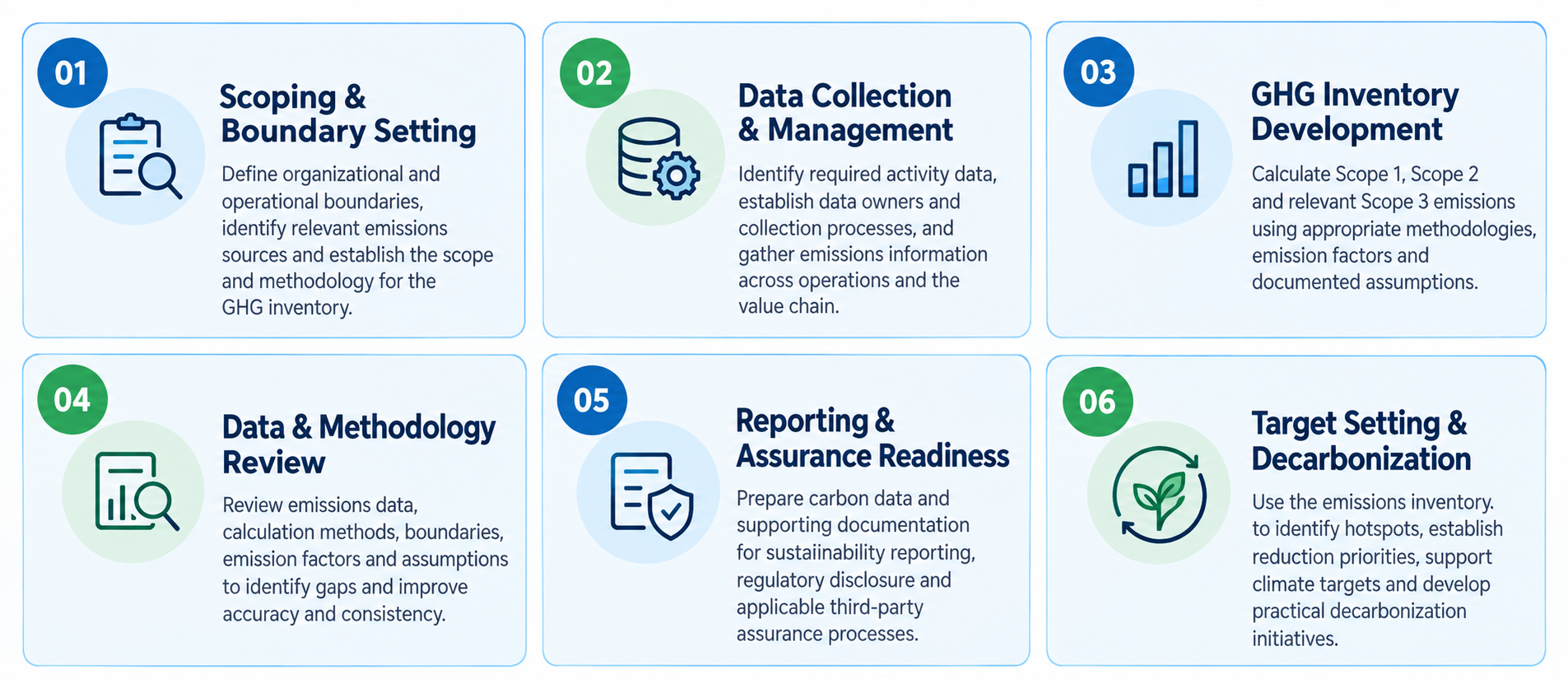
01 — Scoping & Boundary Setting
Define organizational and operational boundaries, identify relevant emissions sources and establish the scope and methodology for the GHG inventory.
02 — Data Collection & Management
Identify required activity data, establish data owners and collection processes, and gather emissions information across operations and the value chain.
03 — GHG Inventory Development
Calculate Scope 1, Scope 2 and relevant Scope 3 emissions using appropriate methodologies, emission factors and documented assumptions.
04 — Data & Methodology Review
Review emissions data, calculation methods, boundaries, emission factors and assumptions to identify gaps and improve accuracy and consistency.
05 — Reporting & Assurance Readiness
Prepare carbon data and supporting documentation for sustainability reporting, regulatory disclosure and applicable third-party assurance processes.
06 — Target Setting & Decarbonization
Use the emissions inventory to identify hotspots, establish reduction priorities, support climate targets and develop practical decarbonization initiatives.
Carbon Accounting Capabilities
Corporate GHG Inventories
Develop organizational carbon footprints covering Scope 1, Scope 2 and applicable Scope 3 emissions.
Scope 3 & Value-Chain Emissions
Identify relevant Scope 3 categories, collect and evaluate data, calculate emissions and prioritize major value-chain sources.
Carbon Data & Methodology Review
Review existing inventories, methodologies, emission factors, assumptions and data sources to identify gaps and opportunities for improvement.
Supplier Emissions & Engagement
Develop approaches for gathering supplier emissions information and improving the quality of value-chain carbon data.
GHG Reporting & Disclosure
Prepare emissions information for sustainability reports, CDP, climate-related disclosures and applicable regulatory requirements.
Assurance Readiness
Strengthen documentation, methodologies, controls and supporting evidence to prepare GHG inventories for applicable independent assurance.
Target Setting & Decarbonization
Use emissions data to establish baselines, identify hotspots, evaluate reduction opportunities and support development of credible climate targets.
Carbon Accounting Systems & Processes
Establish repeatable workflows, responsibilities and data-management processes for annual carbon accounting
Carbon Accounting FAQ
1. What is the difference between carbon accounting and a carbon footprint?
A carbon footprint is the quantified amount of greenhouse gas emissions associated with an organization, activity, product or other defined boundary. Carbon accounting refers more broadly to the processes, methodologies and systems used to measure, calculate, track and report those emissions.
2. What are Scope 1, Scope 2 and Scope 3 emissions?
Scope 1 covers direct emissions from sources owned or controlled by the organization. Scope 2 covers indirect emissions associated with purchased energy. Scope 3 covers other indirect emissions across the upstream and downstream value chain.
TBG can help companies identify applicable emissions sources, establish appropriate boundaries and develop Scope 1, 2 and 3 inventories.
3. Does our company need to calculate Scope 3 emissions?
That depends on the company's reporting objectives and applicable regulatory, customer or stakeholder requirements. For organizations developing a comprehensive corporate GHG inventory, relevant Scope 3 categories can also provide important insight into emissions occurring across the value chain.
TBG can conduct a Scope 3 screening exercise to identify relevant categories and determine where more detailed data collection and calculation may be appropriate.
4. What data do we need for a GHG inventory?
Data requirements depend on the emissions source and calculation methodology. Examples can include fuel and energy consumption, purchased electricity, transportation and logistics information, business travel, purchased goods and services, waste and other operational or value-chain data.
TBG can help identify required data, establish collection templates and processes, and address data gaps using appropriate methodologies.
5. Can TBG review an existing carbon inventory?
Yes. TBG can review existing Scope 1, Scope 2 and Scope 3 inventories, including organizational boundaries, data sources, methodologies, emission factors, assumptions and documentation, to identify gaps and opportunities for improvement.
6. Can carbon accounting support sustainability reporting and regulatory compliance?
Yes. GHG emissions information is an important component of many sustainability and climate-related disclosure requirements. A well-designed carbon accounting process can provide a consistent data foundation for multiple reporting needs rather than requiring companies to reconstruct emissions information separately for each disclosure.
7. Can TBG help us reduce emissions after calculating our footprint?
Yes. A GHG inventory can help identify significant emissions sources and prioritize reduction opportunities. TBG can use the results to support emissions-reduction planning, supplier engagement, climate target setting and broader decarbonization strategies.
Why Work With TBG on Sustainability Reporting & Disclosure
TBG helps companies turn complex emissions data into credible, actionable carbon information.
Our sustainability team works across carbon accounting, climate risk, reporting and disclosure, regulatory compliance and supply-chain sustainability—allowing us to connect GHG measurement with the broader business decisions and reporting requirements it supports.
Whether a company is developing its first GHG inventory, improving an existing Scope 3 assessment or preparing emissions information for regulatory reporting and assurance, we focus on creating practical processes that can be maintained and strengthened over time.
Build a Stronger & Robust Carbon Accounting Program
Whether you're developing your first corporate GHG inventory, expanding Scope 3 measurement, preparing emissions data for disclosure or looking to turn your carbon footprint into an actionable reduction strategy, TBG can help establish a practical path forward.