
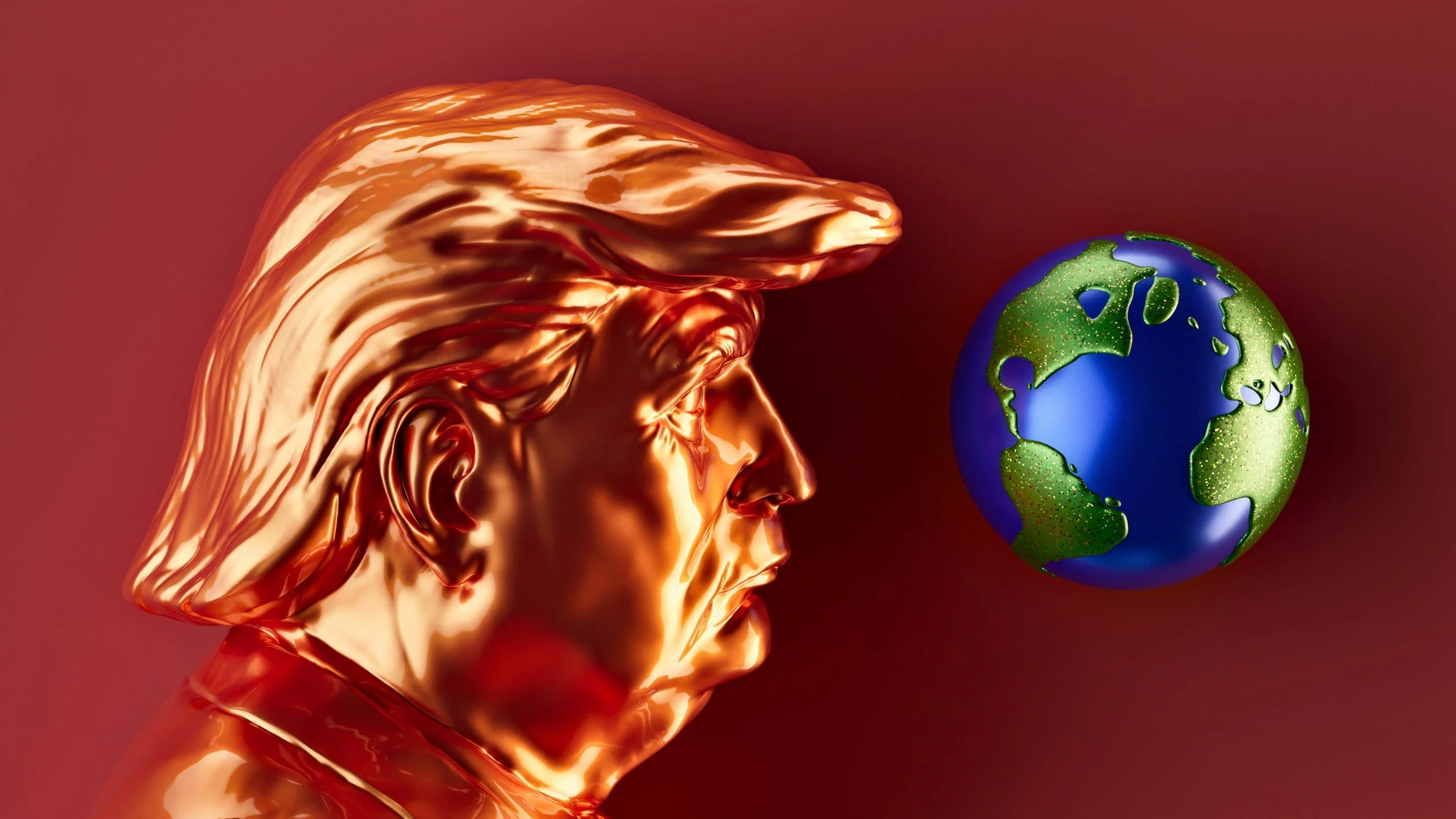
The Trump administration has announced the withdrawal of the United States from 66 international organizations, marking one of the most significant shifts in U.S. foreign and multilateral policy in decades. The move affects a wide range of institutions tied to climate cooperation, global governance, trade coordination, and development, including bodies linked to the UNFCCC framework. Beyond its diplomatic implications, the decision introduces new geopolitical, regulatory, and compliance risks for multinational companies, investors, and governments navigating an increasingly fragmented global policy landscape. So, is this U.S. retreat from the globe an indicator of America First or America Alone? While it is still early to draw definitive conclusions on implications, we can at least separate fact from fiction and provide the critical information on what this does/does not mean. We have curated some key articles below.
EDITOR’S NOTE: The Bassiouni Group (TBG) provides global solutions focused on Sustainability, Innovation and Impact. We leverage a Global Network comprised of more than 1000 experts in over 150 countries. Through TBG Consulting, TBG Global Advisors, TBG Purpose and TBG Capital, we undertake a wide range of projects — from Kenya to Kazakhstan — and transform challenges into opportunities.
Following are some key points to keep in mind:
What happened? The Trump administration announced the withdrawal of the United States from 66 international organizations. These organizations are primarily focused on climate cooperation, global governance, trade coordination, and development, including bodies linked to the UNFCCC framework. But “withdrawing” does not actually mean withdrawing from some groups. Scroll below for more information.
Which specific groups (by focal area)? The list includes multilateral initiatives, international partnerships and treaty-based regimes. Here is a shortlist:
Climate — UN Framework Convention on Climate Change (UNFCCC), Intergovernmental Panel on Climate Change (IPCC), Commission for Environmental Cooperation, International Renewable Energy Agency (IRENA), International Solar Alliance, Intergovernmental Science-Policy Platform on Biodiversity and Ecosystem Services (IPBES), Regional environmental bodies (Pacific, etc.), 24/7 Carbon-Free Energy Compact, Renewable Energy Policy Network for the 21st Century, International Tropical Timber Organization, International Union for Conservation of Nature etc.
UN Bodies and Regional Commissions — UN Department of Economic and Social Affairs, UN Economic and Social Council (ECOSOC) regional commissions (Africa, Latin America & Caribbean, Asia-Pacific, Western Asia), International Trade Centre, International Residual Mechanism for Criminal Tribunals, Office of the Special Adviser on Africa
Governance, Rule of Law, Democracy — International Institute for Democracy and Electoral Assistance, International Development Law Organization, International Institute for Justice and Rule of Law, International Law Commission, Venice Commission of the Council of Europe, Global Forum on Migration and Development, Freedom Online Coalition;
Science, Research, and Cultural Cooperation — Inter-American Institute for Global Change Research, Science and Technology Center in Ukraine, International Centre for the Study of Preservation and Restoration of Cultural Property, International Cotton Advisory Committee
Security & Counter Threats — Global Counterterrorism Forum, Regional Cooperation Agreement on Combating Piracy and Armed Robbery against Ships in Asia, etc.
Education — UNESCO, Education Cannot Wait, UNU, UNITAR, ICCROM, Colombo Plan Council etc.
What is significant about the climate-focused groups? The climate-focused groups play a critical and foundational role in global climate action and, the U.S. has traditionally played a key role (in terms of setting the agenda, financing etc — as evidenced by the Biden and Obama administrations). The list includes foundational organizations such as the UN Framework Convention on Climate Change (UNFCCC) and the Intergovernmental Panel on Climate Change (IPCC) —- as well as the Commission for Environmental Cooperation, International Renewable Energy Agency (IRENA), International Solar Alliance, Intergovernmental Science-Policy Platform on Biodiversity and Ecosystem Services (IPBES), Regional environmental bodies (Pacific, etc.), 24/7 Carbon-Free Energy Compact, Renewable Energy Policy Network for the 21st Century, the International Tropical Timber Organization and the International Union for Conservation of Nature.
What does withdrawal actually mean? Technically, the U.S. cannot “withdraw” from certain organizations so the headline is somewhat misleading. Many of the listed organizations. For example, organizations such as ECOSOC, DESA and the UN’s regional commissions and other UN Secreteriat departments and programmes are not independent international organizations created by treaty. They are statutory components of the UN itself so it is not technically possible for the U.S. to withdrew from those organizations as there is no separate legal membership.
What about overall U.S. funding for global organizations — how is this impacted? The overall funding picture of U.S. funding for international organizations is hard to assess to assess as the State Department has not updated its reporting. According to the Global Center for Development: “Looking at the International Affairs and Defense Budget Justifications, 74 of the 160 organizations listed in the FY2023 international contributions report are identified as receiving core US funding in FY2024. In contrast, at the time the Justifications were released in May, the administration envisioned funding only 31 in FY 2025—although the State Department Justification reported the potential for additional payments later in the fiscal year, which did indeed occur for some organizations. For FY2026, the administration sought core funding from Congress for just 25 organizations (with more to be added, subject to the larger review of international organizations). And the administration’s FY2026 budget proposed curbing this core funding from $4 billion in FY2024 to just $1 billion.”
What are the key considerations? There are a number of key considerations covering all of the core areas.
Climate, Environment & Energy — Which climate, biodiversity, and energy standards will now be set without U.S. input? Will EU-led, China-led, or Global South-led frameworks become the de facto global baseline? Are voluntary standards (ISSB, TCFD-adjacent, science-based targets) likely to fill the governance gap? Will EU regulations (CBAM, EUDR, Digital Product Passport) effectively become extraterritorial substitutes for multilateral climate governance? Are U.S. companies still indirectly bound via supply chains, customers, or capital markets? Does withdrawal increase the risk of fragmented carbon accounting methodologies?
Governance, Rule of Law & Democracy — Which countries or blocs now shape global norms on democracy, elections, and rule of law? Does U.S. withdrawal create space for authoritarian-leaning governance models to gain legitimacy? How does withdrawal affect U.S. credibility when criticizing democratic backsliding abroad? Can the U.S. still lead democracy promotion bilaterally, or is multilateral legitimacy essential? Will international legal standards (AI governance, cyber norms, digital rights) evolve in ways misaligned with U.S. constitutional frameworks? Does disengagement weaken U.S. ability to challenge adverse norms later?
UN Bodies, Multilateral Institutions & Regional Commissions — Which countries gain voting power, agenda control, or leadership positions as the U.S. exits? Are China, Gulf states, or the EU positioned to become agenda-setters rather than participants? Which withdrawals are mostly symbolic versus those that materially affect development finance, trade facilitation, or justice mechanisms? Where does the U.S. retain de facto influence through funding, staffing, or bilateral pressure? Will fragmentation reduce coordination on development finance? Migration flows? Conflict-affected states? Do regional institutions become more influential as global ones weaken?
Security, Counter-terrorism & Transnational Threats — What intelligence-sharing mechanisms are weakened or lost? Do informal or NATO-adjacent channels adequately compensate? Are piracy, terrorism, cybercrime, and hybrid threats more likely to be addressed through regional coalitions instead? Does this increase operational complexity for U.S. defense and intelligence agencies? Are allies forced to increase spending or coordination to fill gaps left by U.S. withdrawal? Does this strain alliances or push partners toward alternative security guarantors? Are shipping, insurance, energy, and logistics firms facing higher risk premiums due to weaker multilateral security coordination?
Science, Research & Cultural Cooperation — Which global research platforms become less accessible to U.S. institutions?Are U.S. universities and labs disadvantaged in multinational grant consortia? Does reduced cooperation slow U.S. leadership in climate science, materials science, or ag-tech? Are competitors gaining first-mover advantages in applied research? Does withdrawal reduce U.S. visibility in global cultural preservation and heritage leadership? How does this affect long-term influence, especially in emerging economies?
Education, Human Development & Soft Power — Which countries gain influence over the next generation of leaders through education and capacity-building initiatives? Does U.S. disengagement weaken future diplomatic and economic ties? Are fragile or conflict-affected states disproportionately impacted by U.S. withdrawal? Could instability increase downstream migration or security risks? Will philanthropy, NGOs, or private capital step in to replace U.S. public engagement? Does this shift priorities away from public-interest goals toward donor-driven agendas?
Cross-Cutting Strategic Issues — Is this withdrawal a temporary political cycle event or a structural shift in U.S. global engagement?Which actors (EU, China, GCC, Global South blocs) are best positioned to exploit the vacuum? Are U.S. companies, investors, and universities prepared for a world where standards are set elsewhere? Does fragmentation increase systemic risk (climate, financial, security), or simply re-route governance through different channels? What capabilities should the U.S. (or U.S. firms) over-invest in domestically to compensate?
Following are key articles curated by the TBG team.
NPR — Why is the U.S. pulling out of 31 U.N. groups? And what's the impact?
President Trump's executive order to withdraw the United States from 66 international organizations, agencies and commissions is reverberating across the globe. Many people who work in the international arena are parsing the order and working to understand the implications and impact.
"This is a ridiculous and dangerous, thoughtless and malicious action," says Nina Schwalbe, a senior scholar at the Georgetown Center for Global Health Policy and Politics, who has been a critic of the Trump administration's cuts to global health.
"He withdrew from the World Health Organization [almost a year ago], which was the first sign of his withdrawal from multilateralism. He cut down a tree. Now he's cutting down the whole forest," she says. "The implications are going to go so far and wide — from children's education to climate change to art and culture. He's just taken a bazooka and blown the whole thing apart."
Others had the opposite take. Brett Schaefer, a U.N. expert at the American Enterprise Institute, would have liked to see the U.S. withdraw from more organizations — and more significant organizations. "I see it as a missed opportunity," he says.
Recalling Trump's promise to reassess how the U.S. engages with international organizations, Schaefer says, "This is, in my opinion….”
Click here to read the rest of to article.
EARTH.ORG — “Less Secure and Less Prosperous’: US Exit From Int’l Climate Treaties Will Hurt Country, Says UN Climate Chief”.
“The US has hit a “new low” by withdrawing from key international climate bodies and treaties as it advances its “anti-science” agenda, experts have said.
On Wednesday, US President Donald Trump instructed all executive departments and agencies “to take immediate steps” to withdraw the country from 66 international organizations that are “contrary to the interests” of the country. These include the Intergovernmental Panel on Climate Change, the world’s most authoritative scientific body on climate change, the International Union for Conservation of Nature, the global authority providing technical and policy advice to drive conservation, and the UN Framework Convention on Climate Change (UFCCC), the primary global treaty for coordinating international climate action.
Experts, government’s leaders, and the scientific community have criticized the decision, saying the US will be left behind as the rest of the world embraces the energy transition, shifting from costly and polluting fossil fuels to cleaner and cheaper renewables like solar and wind.
“While all other nations are stepping forward together, this latest step back from global leadership, climate cooperation and science can only harm the US economy, jobs and living standards, as wildfires, floods, mega-storms and droughts get rapidly worse,” said UNFCCC Executive Secretary Simon Stiell. He added that the move will leave the US “less secure and less prosperous,” with higher energy, food, transport and insurance cost and less manufacturing jobs.
The US, which Stiell says was “instrumental” in creating the UNFCCC and the Paris Agreement, is the first country to…”
Click here to read the rest of the article.
CENTER FOR GLOBAL DEVELOPMENT — “The US Is Staying in Most International Organizations, but Slashing Support”
“In February last year, the White House issued an Executive Order for a State Department review of international organizations, conventions, and treaties to which the United States was a party, in order to exit those it considered “contrary to the interests of the United States.” On January 7, a Presidential memo announced the review had concluded with a decision to exit from 66 entities. The good news is that the review leaves US official involvement in most major international organizations intact (for now). The bad news is that US financial support for those organizations is still critically low.
The list of entities the US is quitting includes the UN Conference on Trade and Development and UN Women through the Office of the Special Representative of the Secretary-General on Violence Against Children and the International Cotton Advisory Committee. But the US is still officially committed to upholding nearly every one of about 200 multilateral treaties it was meant to be abiding by before January 7, with the potential exception of the UN Framework Convention on Climate Change. And it is worth comparing the 66 listed entities to proposals for a considerably wider US disengagement, or placing it in the context of the estimated 45,000 international organizations worldwide (although the US government is a member of only a fraction of that number). Furthermore, the list of 66 entities includes a number that might be better viewed as offices than…”
Click here to read the rest of the article.
AP — “US will Exit 66 international Organizations as it Further Retreats from Global Cooperation”
The Trump administration will withdraw from dozens of international organizations, including the U.N.'s population agency and the U.N. treaty that establishes international climate negotiations, as the U.S. further retreats from global cooperation.
President Donald Trump on Wednesday signed an executive order suspending U.S. support for 66 organizations, agencies, and commissions, following his administration’s review of participation in and funding for all international organizations, including those affiliated with the United Nations, according to a White House release.
Many of the targets are U.N.-related agencies, commissions and advisory panels that focus on climate, labor, migration and other issues the Trump administration has categorized as catering to diversity and “woke” initiatives. Other non-U.N. organizations on the list include the Partnership for Atlantic Cooperation, the International Institute for Democracy and Electoral Assistance, and the…”
Click here to read the rest of the article.
FORBES — What The U.S. Withdrawal From 66 International Bodies Means For American Business
“Nearly a year after President Donald Trump signed an executive order to review U.S. support for international organizations, the Administration announced plans to withdraw from 66 United Nations entities and international bodies “contrary to the interests of the United States.” As expected, environmental organizations took a big hit, the most notable being the United Nations Framework Convention on Climate Change (UNFCCC).
While the move is often framed as a blow primarily to "green economy" firms and climate policies, the true impact of this disengagement touches U.S. businesses across all sectors that rely on global standards, trade rules and regulatory frameworks.
We don’t yet know what the withdrawals will mean for US businesses, or how quickly they may take effect.
Exiting international organizations and treaties takes time. The process often requires formal notification and waiting about one year. When the United States withdrew from the World Health Organization, the Administration announced the decision in January 2025, and the withdrawal became effective 12 months later.
or at least some of the entities listed, the clock has not started because the U.S. government has not formally informed the United Nations of its intent to…”
Click here to read the rest of the article.
THE GUARDIAN — “Outrage as Trump Withdraws from Key UN Climate Treaty Along with Dozens of International Organisations”
“Donald Trump has sparked outrage by announcing the US will exit the foundational international agreement to address the climate crisis, cementing the US’s utter isolation from the global effort to confront dangerously escalating temperatures.
In a presidential memorandum issued on Wednesday, Trump withdrew from the UN Framework Convention on Climate Change (UNFCCC), along with 65 other organizations, agencies and commissions, calling them “contrary to the interests of the United States”.
The UNFCCC treaty forms the bedrock of international cooperation to deal with the climate crisis and has been agreed to by every country in the world since its inception 34 years ago. The US Senate ratified the treaty in October 1992.
Trump has, however, routinely ridiculed climate science as a “scam” and a “hoax” and has actively hobbled clean energy projects and other climate policies as president, attempting to force the US and other countries to stay wedded to the fossil fuels that are driving disastrous heatwaves, storms, droughts and conflicts that imperils billions of people around the world.
Simon Stiell, the UN’s climate chief and executive secretary of the UNFCCC, described the move as a “colossal own goal”. He said: “While all other nations are stepping forward together, this latest step back from global leadership, climate cooperation and science can only harm the US economy, jobs and living standards, as wildfires, floods, mega-storms and droughts get rapidly worse. It is a colossal own goal which will leave the US….”
Click here to read the rest of the article.
THE BULLETIN OF ATOMIC SCIENTISTS — “Pulling out of 66 international organizations, Trump turns his back on science, facts, reason”
“Whether the president and his supporters like it or not, the United States is part of a complex, interconnected world. Global supply chains, commerce, and economies are intricately intertwined. Countries are connected electronically via the internet, email, and social media. Humans are also linked through a shared global climate system, which influences—and can be influenced by—life on Earth.
On January 7, President Donald Trump, citing “the authority vested in me as President by the Constitution and the laws of the United States of America,” withdrew the United States “from International Organizations, Conventions, and Treaties that Are Contrary to the Interests of the United States.”
The list of “Organizations from which the United States Shall Withdraw” has 66 entries. It is divided into two categories: non-United Nations (UN) organizations and UN organizations.
The list contains such diverse entities as the International Renewable Energy Agency, the International Solar Alliance, the Partnership for Atlantic Cooperation, the UN International Law Commission, the Office of the Special Representative of the Secretary General for Children in Armed Conflict, the UN Peacebuilding Commission, and the International Union for Conservation of Nature. Under the Trump Administration, international law, conserving nature, protecting children from war, developing renewable energy, and building peace are issues antithetical to US interests.
As one might expect given the administration’s systematic efforts to dismantle US climate science, international climate organizations and treaties are also on “the list of 66.” Examples include the Inter-American Institute for Global Change Research and the UN Framework Convention on Climate Change (UNFCCC). The UNFCCC seeks to avoid dangerous anthropogenic interference with Earth’s climate—a goal that should be of interest to…”
Click here to read the rest of the article.
MODERN DIPLOMACY — “The US withdrawal from 66 global organisations bells danger to Multilateralism”
Marked by the evolution of a multilateral order characterized by the United Nations, Bretton Woods institutions, and a broad suite of international organizations, it was believed that the optimism behind the cooperative frameworks would help reduce global conflicts, coordinate global public goods policies, and manage major transnational challenges. The UNSC, loaded with immense powers with its five permanent members (P5, though challenged on grounds of non-representativeness), was central to this design, providing an institutional locus for collective security deliberations. However, the changing geopolitical realities and economic power shifts have exposed the limitations of this architecture and forced some of the global actors to seek isolationism as a way of perpetuating their traditional dominance. On January 7, 2026, through Executive Order 14199, President Trump announced the withdrawal of the United States from 66 international organizations (35 non-United Nations and 31 UN entities) identified as part of the Trump Administration’s review of wasteful, ineffective, and harmful international organizations (Marco, 2026).
The multilateral architecture of post-World War I and II differed significantly in means and objectives from what preceded it, as it incorporated international agencies, treaties, and conventions in the fields of international law, world peace, trade and economics, science and technology, and the laws of warfare. The transition from the League of Nations to the United Nations, together with the founding of Bretton Woods institutions, signified a progression from an idealistic yet ineffective framework to a more pragmatic structure that reconciled global cooperation with the dynamics of power politics. Post-WWI, multilateralism was rooted in liberal internationalism, advocating peace, cooperation, rule-based order, and democracy to prevent conflict. This idealistic notion had its inspiration in Immanuel Kant’s doctrine of perpetual peace. Norman Angel’s ‘The Great Illusion’ (1910) and President Woodrow Wilson’s ‘Fourteen Points’ were influential in promoting a pacifist worldview and a belief in the futility of war. Theoretical advancements mirrored similar transformations, as the post-WWII period adopted a more institutional and realist perspective on multilateralism while also incorporating ongoing liberal and constructivist views (Thakur, 2024, 557).
The organizations from which the US withdraws are focused on climate change, the environment, human rights, gender issues, and migration. The decision forms part of Trump’s jingoistic “America First” policy prioritizing US interests over global commitments. This US disengagement also marks its withdrawal as a chief architect and funder of the post-1945 institutional order. It marks the beginning of further decline of the multilateral order, rules-based global governance, and…”
Click here to read the rest of the article.