
COP30 in Belém: Key Outcomes, Missed Opportunities, and What Comes Next
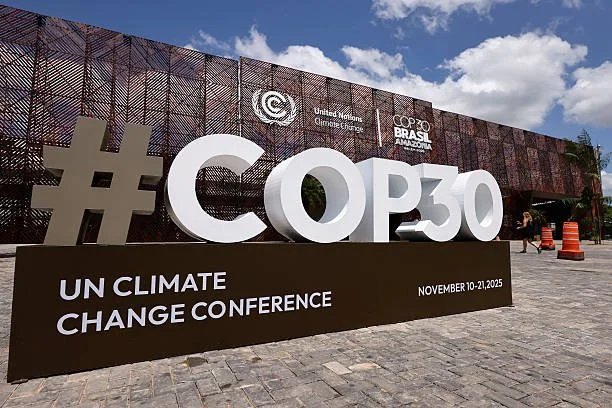
COP30 in Belém: Foundations Laid, But the Hard Work Ahead
The 2025 UN Climate Change Conference — COP30 — concluded in Belém, Brazil, after two intense weeks of negotiations, activism, and global scrutiny. Taking place on the edge of the Amazon rainforest, the summit carried symbolic and material weight: a climate conference hosted in one of the planet’s most critical ecosystems, at a moment when the international community faces both worsening climate impacts and stagnating political will.
Several key initiatives shaped the discussions:
• Global Mutirão: A collaborative platform bringing together governments, indigenous groups, civil society, and private actors to accelerate climate implementation projects, especially in tropical regions. It emphasizes local leadership, participatory governance, and accountability.
• Belém Mission to 1.5: A coalition of countries and organizations committed to aligning climate action with the 1.5°C target, emphasizing accelerated emission reductions, adaptation measures, and finance for vulnerable communities.
• Tropical Forests Forever Fund (TFFF): A funding mechanism aimed at protecting tropical forests, supporting reforestation, and ensuring that conservation efforts benefit local and indigenous communities.
Below is a clear breakdown of the major developments, key takeaways, and what to watch next as the world heads into a decisive decade for climate action
A COP Defined by Implementation, Not Ambition
From the start, COP30 did not seek to introduce new sweeping pledges, but to strengthen the mechanisms, financing, and accountability structures needed to actually carry out existing commitments. Delegates emphasized:
• Creating standards for emissions and carbon accounting
• Scaling industrial decarbonization frameworks
• Supporting nature-based solutions
• Strengthening financing tools for adaptation and resilience
This pivot reflects a growing global consensus: pledges and political statements mean little without infrastructure to support real-world action.
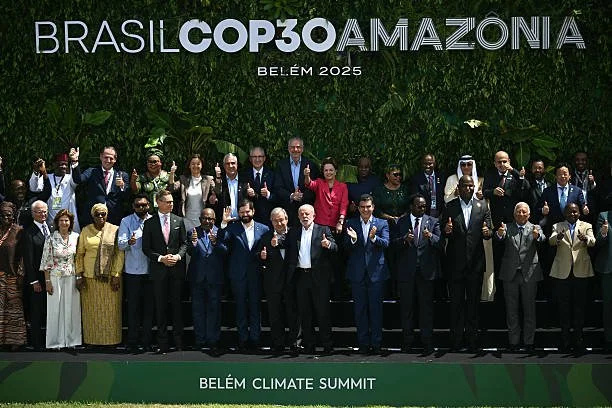
A Landmark Win: Adaptation Finance Tripled by 2035
One of the most tangible victories from COP30 was the agreement by developed countries to triple adaptation finance by 2035 (United Nations). This marks a long-awaited acknowledgment that:
• Climate impacts are already harming vulnerable countries
• Adaptation cannot remain underfunded compared to mitigation
• Finance must reach frontline communities facing rising temperatures, floods, droughts, and ecosystem loss.
Equally important, a new just-transition mechanism (World Economic Forum) was introduced to support workers and communities affected by the shift away from fossil fuels. While details still need refining, the initiative places social equity at the center of the climate response.
National Climate Plans: Mixed Signals from Major Emitters
Several countries arrived at COP30 with strengthened Nationally Determined Contributions (NDCs), including Brazil, Japan, South Africa, Switzerland, and the UAE. These were meaningful political signals (United Nations).
But the overall picture remains troubling:
• Some of the world’s largest emitters delayed updates
• The combined pledges still fall well short of the 1.5°C pathway
• The global emissions gap remains dangerously wide.
The science is unambiguous: without rapid reductions this decade, limiting warming to 1.5°C will move from improbable to impossible (World Economic Forum).
The Fossil Fuel Question: Still the Elephant in the Room
One of the summit’s biggest disappointments was the failure to secure a binding commitment to phase out fossil fuels (The Economist). Although more than 80 countries supported some form of fossil-fuel transition roadmap (CarbonBrief):
• A unified global phase-out agreement did not materialize
• Final language was softened due to geopolitical pressure
• Major fossil fuel-producing nations resisted binding targets.
This outcome underscores persistent divisions at the heart of climate diplomacy, even as climate impacts accelerate.
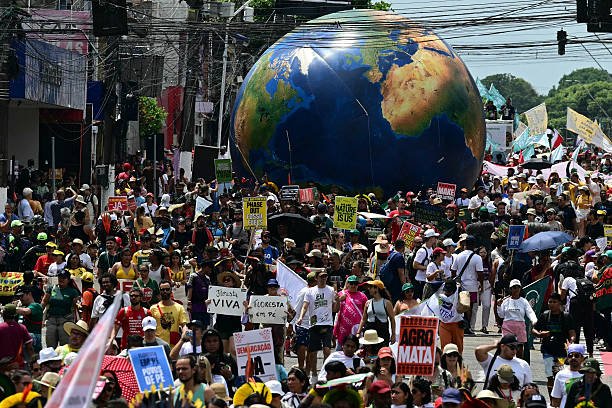
Voices from Belém
Key participants shared diverse perspectives:
• “ COP30 can mark a new era of international cooperation, with the Amazon at the center and the heart of the planet” Conservation International
• “Our land is not for sale…We want our lands free from agribusiness, oil exploration, illegal miners and illegal loggers” Al Jazeera
• “From debt and trade injustice to corporate capture, the same systems driving the climate crisis still hold back real change. At COP30, governments must agree a Belém Action Mechanism that confronts these inequalities and builds national spaces where people — not profit — shape the path of transition” Climate Network
External Coverage & Resources
Top articles covering COP30:
United Nations: COP30 closes with agreement to step up support for developing countries
The Economist: COP30 ends with a whimper
Carbon Brief: COP30: Key outcomes agreed at the UN climate talks in Belém World
World Economic Forum: Adaptation is moving up the climate agenda. COP30 must get serious about financing it.
Reuters: COP30 climate summit deadlocked as EU rejects draft deal
BBC: What was agreed on climate change at COP30 in Brazil?
Final Reflection: A Step Forward — But Not Far Enough
COP30 delivered progress on adaptation, justice, and implementation frameworks. It highlighted the importance of climate equity and the centrality of the Amazon in the global climate system. It strengthened some national commitments and encouraged new collaborations but it also failed to deliver the transformational fossil-fuel exit that science, movements, and frontline communities urgently demand. Climate action must now move from incremental progress to transformational change — grounded in justice, aligned with scientific urgency, and supported by real financial and political commitment (United Nations). The next decade will determine the planet’s trajectory. COP30 will be remembered as a summit that laid structural foundations — but left the heavy lifting for what comes next.
EDITOR’S NOTE:
The Bassiouni Group (TBG) provides global solutions focused on Sustainability, Innovation and Impact. We leverage a Global Network comprised of more than 1000 experts in over 150 countries. Through TBG Consulting, TBG Global Advisors, TBG Purpose and TBG Capital, we undertake a wide range of projects — from Kenya to Kazakhstan — and transform challenges into opportunities.