
The ESG Label Is Disappearing. The Money Isn't.
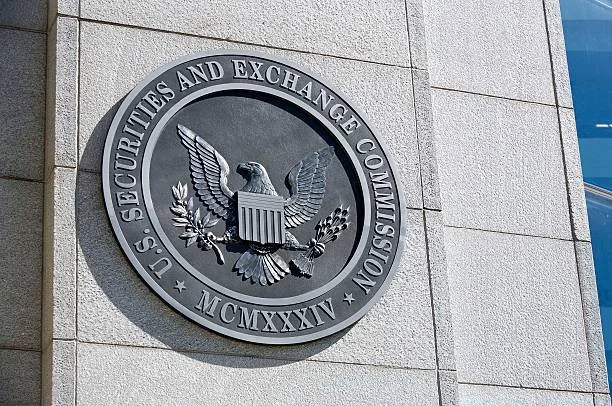
The United States has backed away from its ESG-related compliance push, at least at the federal level. The SEC (U.S. Securities and Exchange Commission) rescinded its corporate climate disclosure rules, and ESG language has largely disappeared from company reporting and public communication. But the investment hasn't stopped. Capital is still flowing into renewable energy, more resilient supply chains, and climate risk management. Companies are just less willing to call it ESG.
There's even a name for it: greenhushing. Companies are deliberately saying less about real sustainability work to avoid political scrutiny or public backlash. The language is changing more than the work itself. The bigger question is what that means for the rest of the world, particularly Africa.
Even in the United States, it isn't quite that simple. California has not followed the federal retreat. In February 2026, the California Air Resources Board (CARB) finalized the rules implementing SB 253, the Climate Corporate Data Accountability Act, and SB 261, the Climate-Related Financial Risk Act. Companies with more than $1 billion in annual revenue will still begin reporting emissions this year. So while Washington has stepped back, not everyone has followed.
The rest of the world has not followed Washington's lead. Europe has slowed parts of its sustainability agenda, partly in response to political and economic pressure, and the EU's Omnibus proposal has narrowed the scope of the Corporate Sustainability Reporting Directive (CSRD). But that's a narrowing of scope, not an abandonment of the broader framework. At the same time, the EU is pressing ahead with its ESG Ratings Regulation, which suggests Europe is still building out its sustainability reporting framework.
In many respects, the conversation has shifted from Washington to Brussels. Europe and international standard setters are now having more influence over sustainability reporting than the United States. That matters because those are the markets that continue to shape how companies access capital and trade internationally.
The backlash has not affected every part of ESG equally. Social issues, particularly diversity, equity, and inclusion (DEI), have become far more politically contentious than environmental disclosure. The backlash hasn't hit every part of ESG in the same way.
Impact on Africa
You'd think African exporters and suppliers would face less pressure now that the United States has scaled back its federal climate disclosure rules. In reality, many African businesses sell into multinational supply chains that are still governed by European regulations and international reporting standards. Instead of following changing U.S. policy, they continue aligning with the EU's Corporate Sustainability Reporting Directive and the International Sustainability Standards Board (ISSB).
Increasingly, sustainability reporting is becoming less about regulation and more about staying competitive. Companies that want continued access to international markets and investment still need to show responsible environmental and governance practices.
Olam shows this well. As one of the world's largest agribusinesses, Olam sources commodities from millions of smallholder farmers across Africa before exporting them to global markets. Even as ESG disclosure requirements have eased in the United States, Olam has continued investing in supply chain traceability, regenerative agriculture, sustainability-linked finance, and sustainability reporting. That's less about U.S. regulation and more about what European customers, international investors, and multinational food companies still expect. For globally integrated African businesses like Olam, sustainability reporting has become part of doing business, not simply a compliance exercise.
Those same pressures are showing up in African capital markets, too. Over the past year, several stock exchanges have strengthened sustainability disclosure requirements, not because of political changes in Washington, but because stronger reporting helps attract international investors.
Nigeria is not waiting to see where global markets land. In February 2026, the Financial Reporting Council of Nigeria published its updated roadmap for IFRS Sustainability Disclosure Standards, with phased ISSB-aligned reporting beginning in January 2028 for Public Interest Entities, including listed companies. The signal is hard to miss. If international investors expect stronger sustainability reporting, Nigeria intends to meet that expectation.
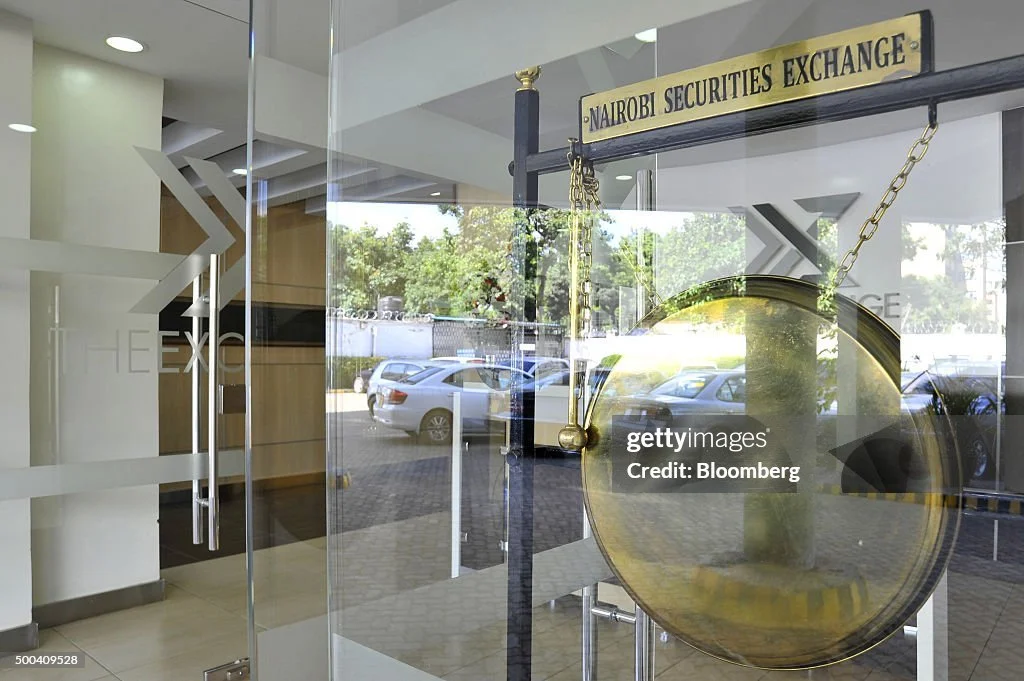
Kenya has moved even faster. Beginning January 1, 2027, every company listed on the Nairobi Securities Exchange will be required to publish independently verified sustainability disclosures alongside audited financial statements, aligned with international reporting standards. That isn't surprising. Kenya depends heavily on exports such as tea and flowers, while the European Union remains its largest trading partner. For many Kenyan companies, meeting international sustainability expectations is simply part of doing business.
South Africa has taken a different path because it started earlier. Rather than introducing mandatory sustainability reporting for all listed companies, the Johannesburg Stock Exchange updated its voluntary ESG reporting guidance in 2025 to align with ISSB standards. Between the JSE's sustainability initiatives and the King Codes, many South African companies were already producing sustainability disclosures well before regulators elsewhere began introducing new requirements.
The same shift is happening at the continental level. Since 2024, the African Organisation for Standardisation (ARSO) has been developing its own sustainability standards, benchmarked against international frameworks, including the EU's deforestation regulation and the United Nations Economic Commission for Africa UNECA. In 2025, ARSO approved ten new Eco-Mark Africa standards covering construction, mining, agriculture, textiles, and tourism. It also shows something bigger. African institutions are beginning to shape sustainability standards themselves instead of simply adopting someone else's.
Looking across Africa, the trend is hard to miss. The debate in Washington has not changed the direction of travel. The rules shaping African companies increasingly come from Brussels, international standard setters, and African institutions themselves. Whether companies call it ESG is becoming beside the point. If they want access to global markets and capital, they are still expected to meet many of the same sustainability standards.
So the label may be disappearing, but the systems that move money into Africa are not. Blended finance, development finance institution lending, and risk-sharing structures were supporting many of these investments long before ESG became the dominant acronym. They'll probably keep doing it long after the acronym disappears. If you want to understand where climate and development capital is actually going, the acronym was never the thing to watch.